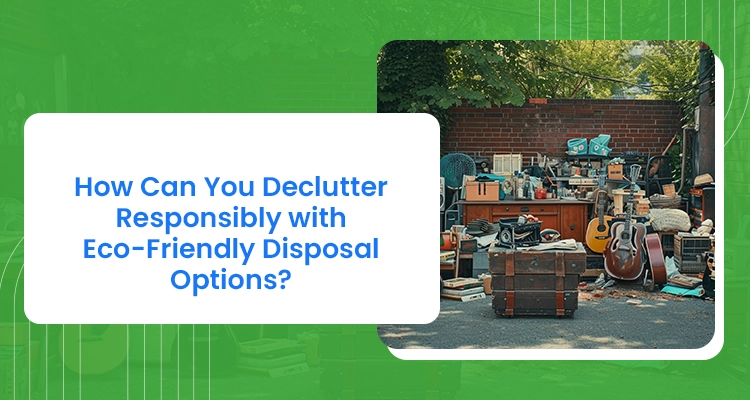
Decluttering your house can be an exhilarating experience. Less clutter means less stress and an organized home. But what happens to the items you discard? Many people dump all of their garbage into bags and then take them to the trash without a second thought. If you’re trying to tidy your house without causing harm to the earth, choosing sustainable and eco-friendly disposal methods is the best approach.
Find out how to clean your home and dispose of unwanted items in a way that’s kind to the Earth.
1. Begin by Focusing on the Process of Decluttering
Before throwing things out, you should take time to organize. Take a tour of your room, and categorize items in clear groups: donate to charity, sell it, recycle and garbage. This helps in reducing waste but also guarantees that the items you can use have a second life.
As you declutter, ask yourself:
- Have I used this recently?
- Is it still serving an important purpose, or do you feel it brings happiness?
- Is it still in good condition?
The aim is to take a deliberate approach and beware of an unproductive, rushed cleanup.
2. Donate Usable Items
If you find something in great condition but it is no longer of use to you, think about making a donation. Kitchenware, furniture, clothes, toys, books and electronic devices can usually get a new home by:
- Local thrift stores or charities (e.g., Salvation Army, Goodwill)
- Community centres or shelters.
- Churches or other religious institutions.
- “Buy Nothing” Facebook groups or neighbourhood apps.
Donating can be a great means of giving back to others while helping keep items out of landfills.
3. Recycle the Right Way
It is not always appropriate to put everything in the trash can. Certain materials need special handling in order to be recycled responsibly. Some common materials that require care in disposal are:
- Electronics (e-waste): phones, televisions, laptops, and other devices are to be disposed of at specific recycling centers for electronic waste.
- Batteries and Light Bulbs: contain toxic materials that should not be thrown away in the garbage. Take them to hardware stores or drop-off points.
- Appliances and Scrap Metal: Local recycling facilities or junk removal services will take care of these.
- Paint & Chemicals: Home-based hazardous trash should be disposed of in designated facilities. Never pour it in the garbage or dispose of it improperly.
Go to your local city’s website or guidelines for waste disposal for the correct pickup locations as well as collection times.
5. Upcycle Creatively
Before throwing anything away, consider whether it could be changed.
Upcycling can be a rewarding and sustainable way to reuse objects. Repurpose old furniture into planters, create storage bins from glass containers or make use of glass containers as organizers. Pinterest and YouTube have a wealth of DIY strategies that could give new life to the pile of “junk.”
6. Compost Organic Waste
If you’re decluttering by cleaning out your fridge or pantry Do not let the food you have stored end up in the bin. Composting is an excellent method to cut down on food waste as well as provide nutrients to the gardening space.
A lot of vegetable and fruit leftovers and coffee grounds eggshells, paper towels and other food waste can be used for composting. Start a garden composting bin, or you can use the municipal composting service if they are available in your region.
7. Hire an Eco-Conscious Junk Removal Company
If you’re undertaking a significant cleanup–perhaps after a move, renovation, or estate clearance, you should consider hiring a removal service. However, not all businesses are made equal.
Find companies that:
- Sort and segregate materials
- Donate usable items
- Recycle anything they are able to
- Reduce the number of trips to landfills.
The eco-friendly junk removal service does the heavy lifting and ensures that your junk is disposed of safely.
8. Reduce Future Clutter
Decluttering is only one aspect of fighting the good fight. Maintaining your space free of clutter is as crucial. A great way to prevent clutter is to be aware of the things you put in your house.
Here are some habits to assist:
- Be Mindful When Shopping: purchase what you will need and cherish.
- Choose High-Quality Over Quantity: Lasting products last longer and decrease the requirement for replacing them.
- Choose Reusable Over Disposable: opt for cloth napkins, stainless steel straws, and refillable containers.
- Make a Habit of a One-In, One-Out Rule: For each new thing you add, you can let one go.
This practice promotes a sustainable lifestyle that promotes a clean and green home.
Final Thoughts
Decluttering in a responsible way isn’t just about getting rid of your clutter, but it’s about safeguarding our environment. If you put in the effort, you’ll get rid of unwanted things and give them a second life whenever possible. It doesn’t matter if you’re donating, recycling, and composting, or if any eco-friendly choice can make an impact.
The next time you embark on a project to declutter, consider going green. Your house and the planet will be grateful for it.